Inside Agentic AI Workloads
Agentic workloads repeatedly re-enter model inference over growing state. We characterize how trajectories, KV-cache retention, and tool use shape serving demand.

A blog about our lab's research on high performance AI systems.
Agentic workloads repeatedly re-enter model inference over growing state. We characterize how trajectories, KV-cache retention, and tool use shape serving demand.
Showing 12 previous posts.
Gimlet brings Cerebras’ wafer-scale compute into Gimlet Cloud, enabling inference at up to 3,000 tokens per second while expanding the performance and efficiency available for agentic and real-time AI applications.
Today, we are announcing our $300M Series B raise, led by Andreessen Horowitz and joined by Sapphire Ventures, Menlo Ventures, 645 Ventures, Arm, Eclipse, Emergence, Factory, Hudson River Trading, M12, OnePrime Capital, Prosperity7, QuantumLight, Samsung Ventures, Tiger Global Management, Triatomic, Wing Venture Capital, and XTX Markets.
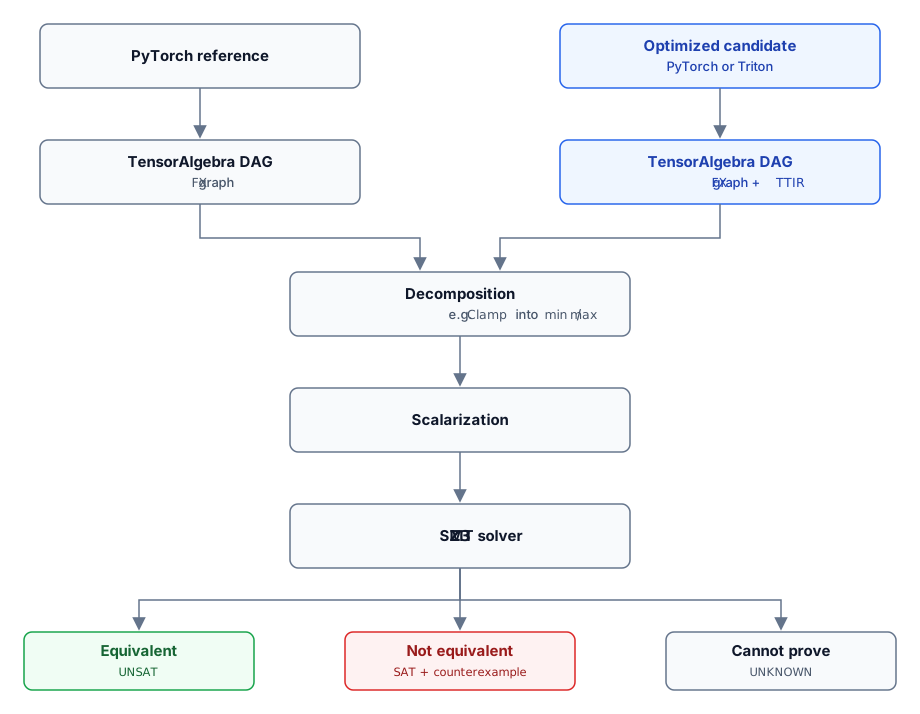
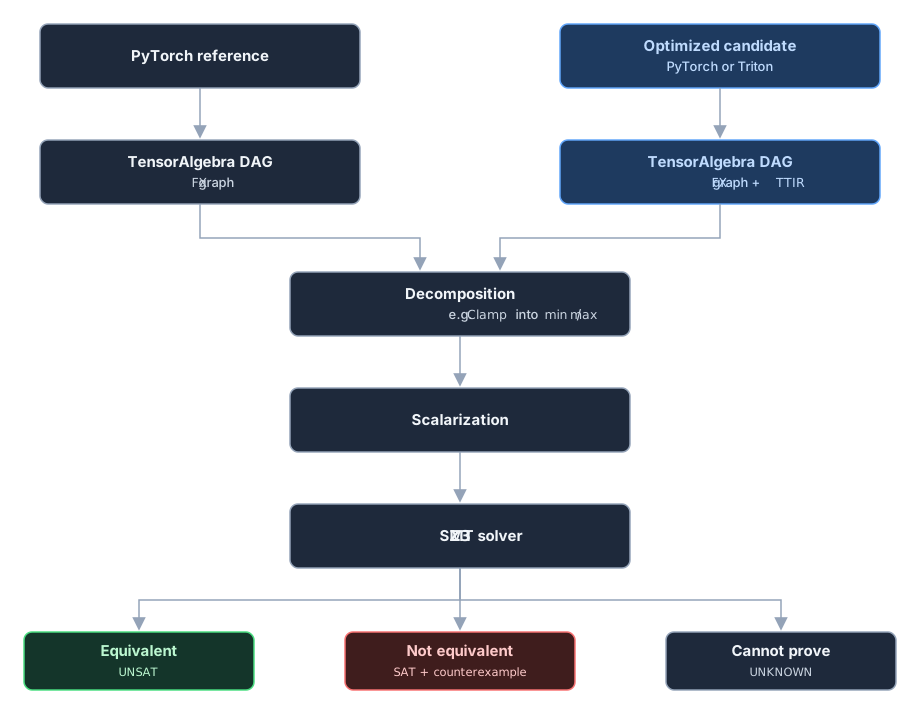
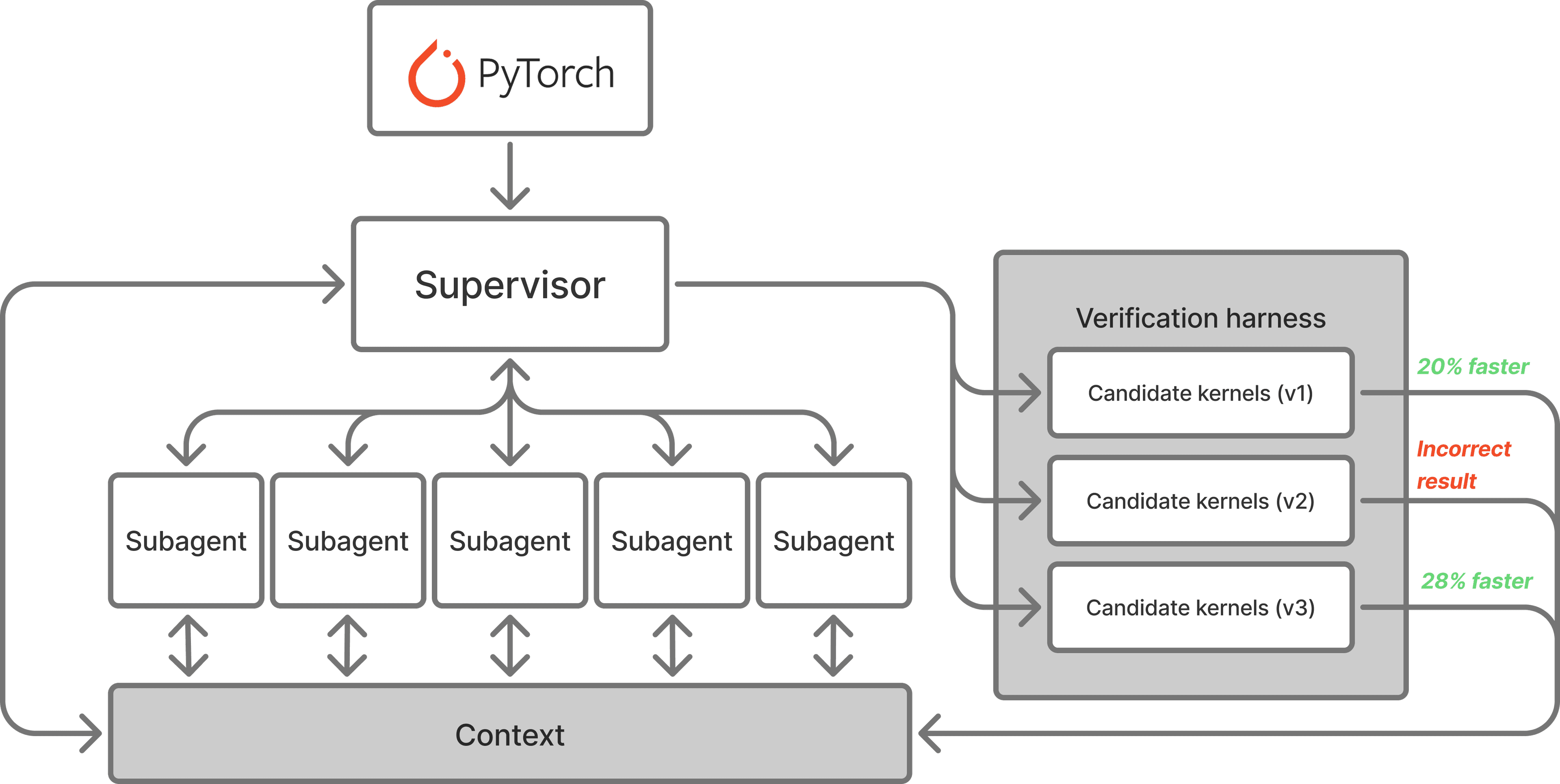
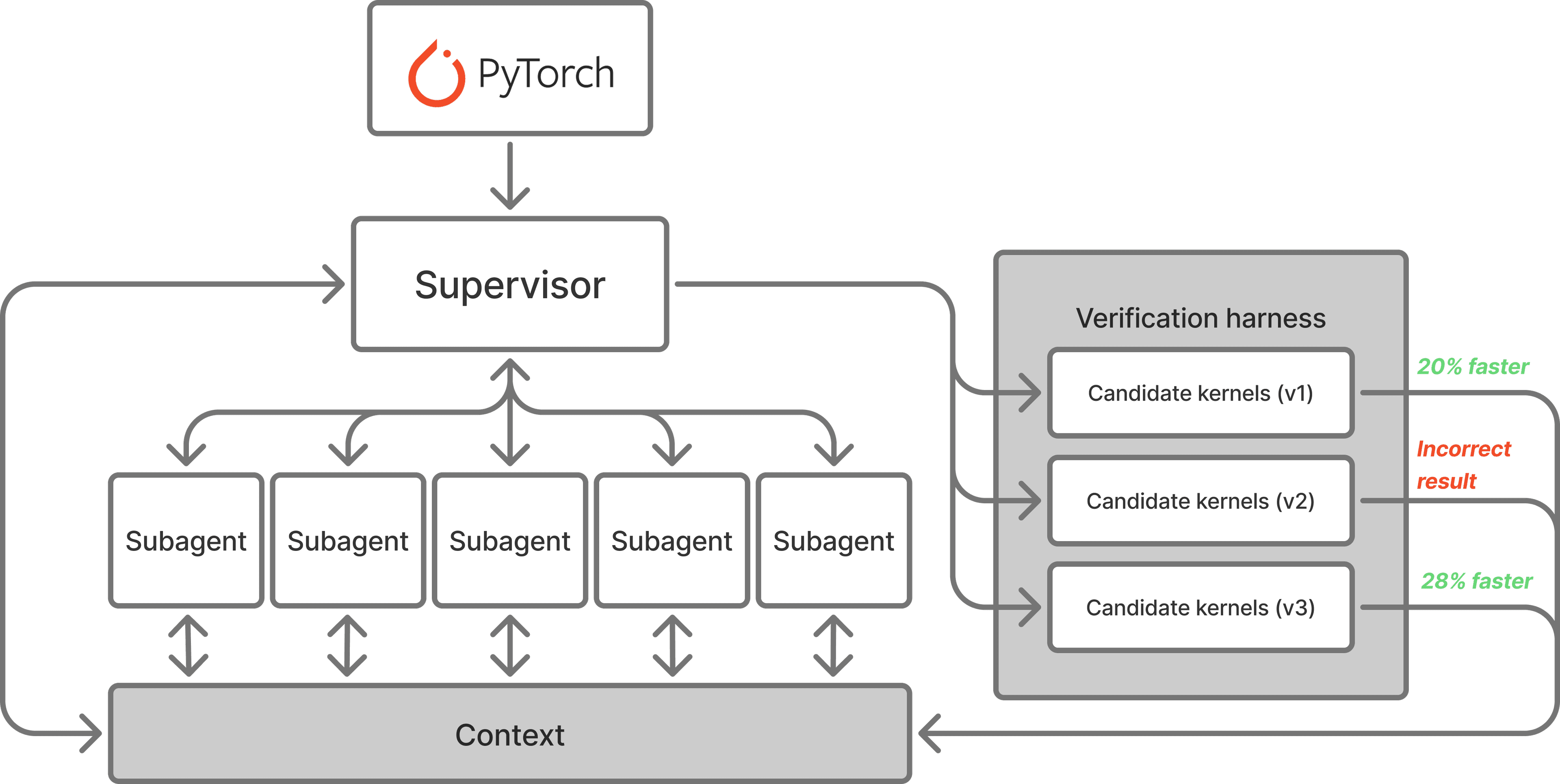
As AI agents get better at generating performant GPU kernels, building trust in their outputs becomes the bottleneck. At Gimlet, we've built an early research system that uses formal verification to complement traditional numeric tests in catching bugs in AI-generated kernels.
Gimlet Labs is now a member of MLCommons, the nonprofit consortium behind MLPerf. Together, we'll help establish new open benchmarks for agentic inference.
Today, we're announcing our $80M Series A raise, led by Menlo Ventures and joined by Eclipse, Factory, Prosperity7, and Triatomic.
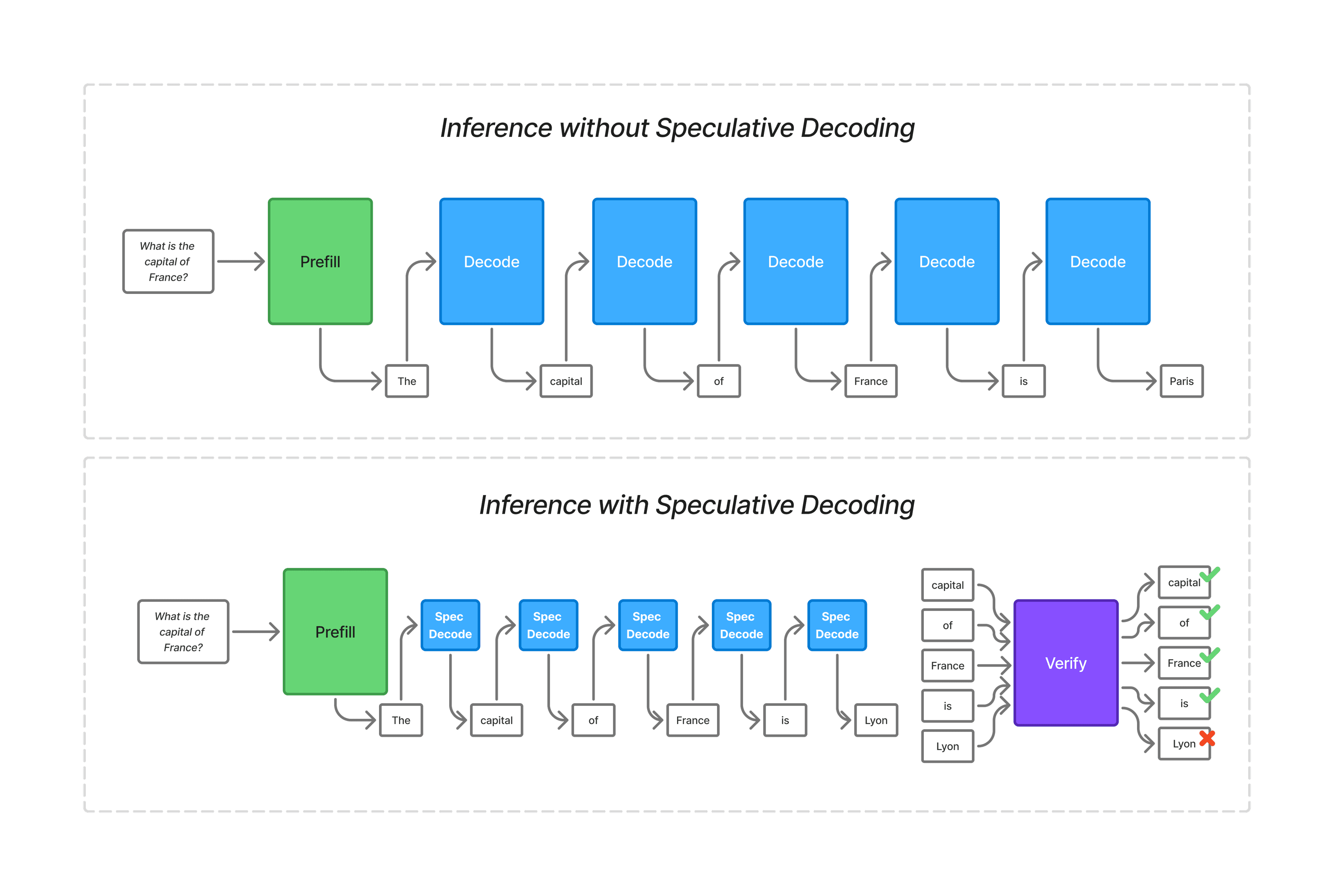
We evaluated running gpt-oss-120b with a 1.6B parameter speculative decoder on d-Matrix Corsair. Compared to the same speculative decoder on GPU and equivalent energy consumption, we've found that the Corsair-based solution delivers 2-5X end-to-end request speedup on configurations optimized for interactivity, and up to 10X end-to-end speedup for energy-optimized configurations.
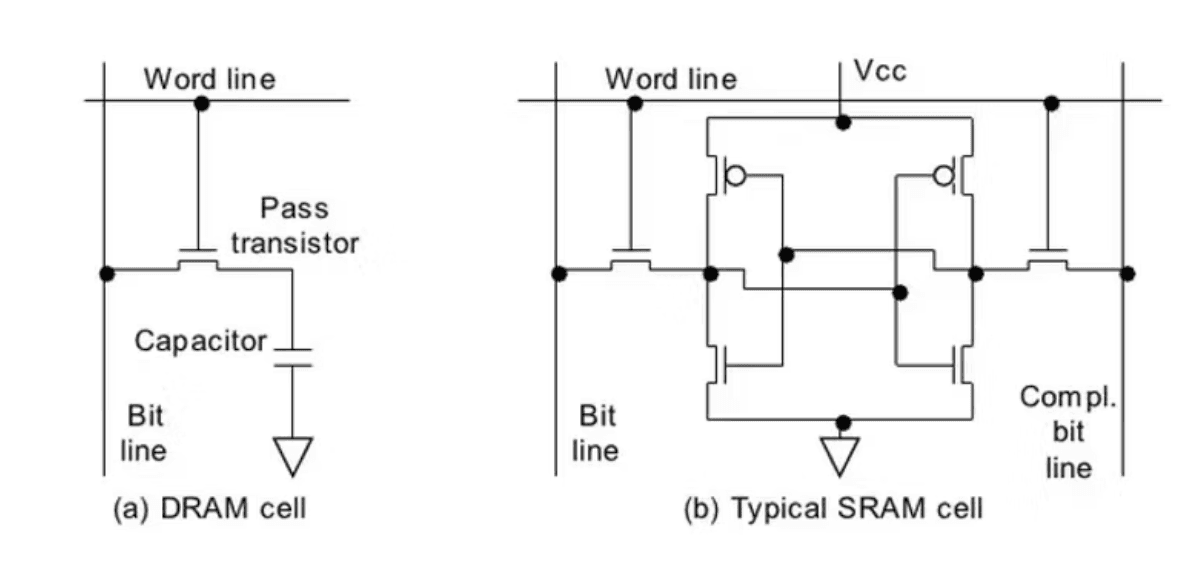
In this post, we'll discuss the major differences between GPUs and SRAM-centric accelerators (e.g. Cerebras, Groq, and d-Matrix), explaining why near-compute memory versus far-compute memory is the key tradeoff being made by these architectures, and what this means for inference workloads.
We're excited to finally share what we've been building at Gimlet Labs. Our mission is to make AI workloads 10X more efficient by expanding the pool of usable compute and improving how it's orchestrated.
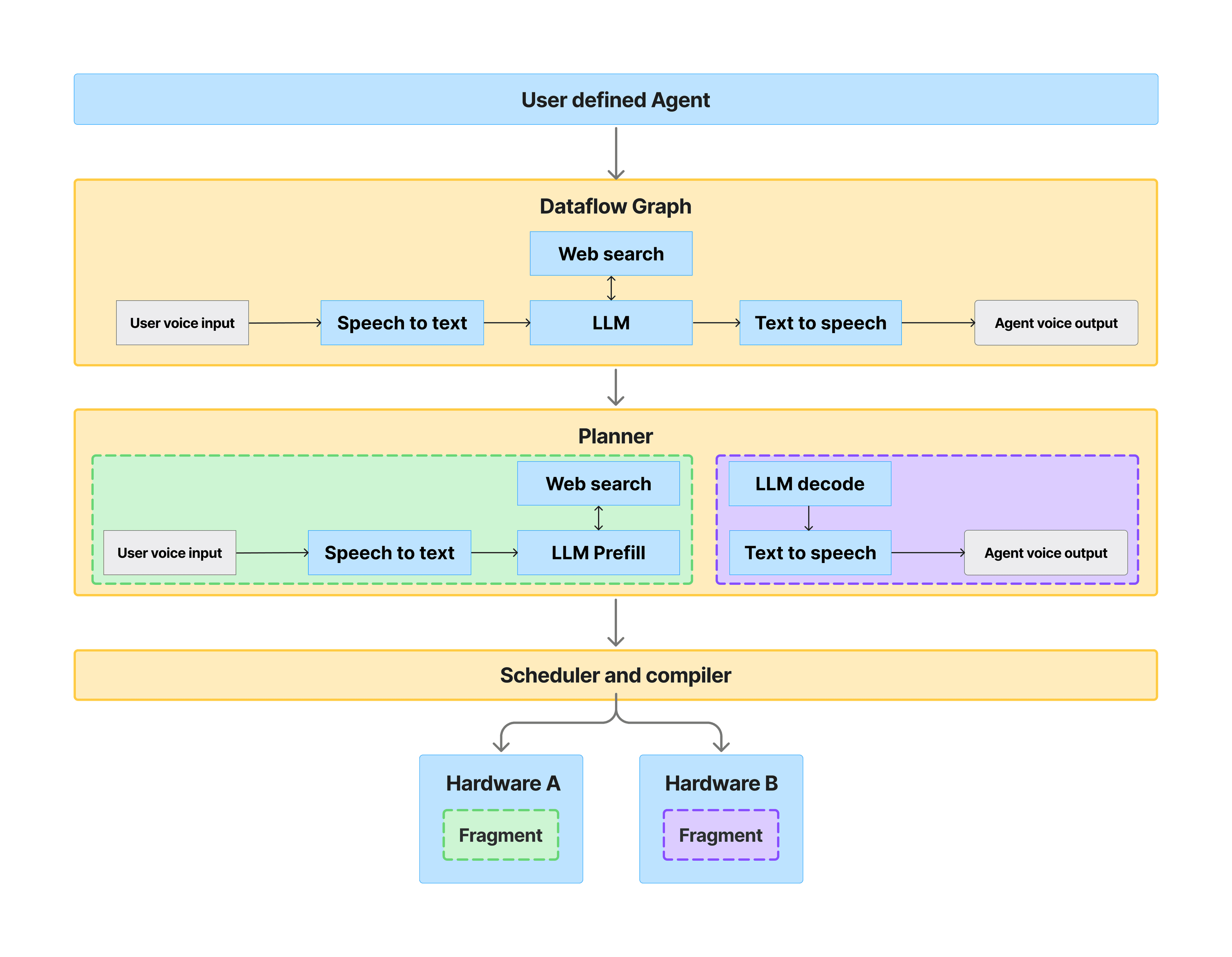
AI workloads are shifting from simple LLM inference to complex, multi-model workflows. To run them efficiently at scale, we need a system that can dynamically decompose workloads, plan and schedule them, and map execution to the right hardware.
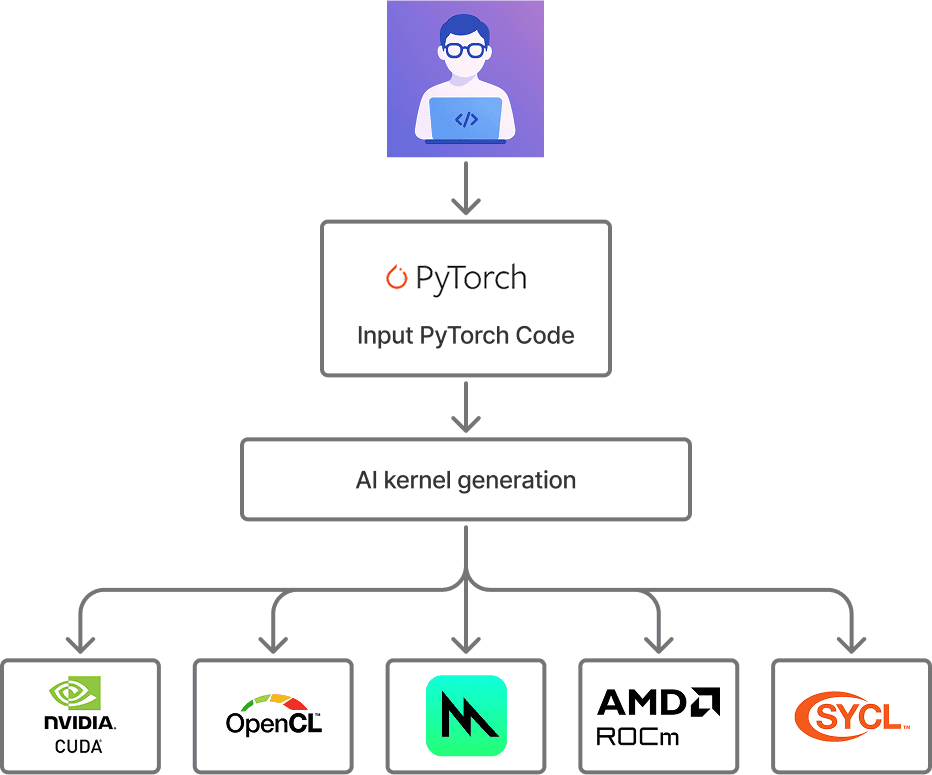
We extended our kernel generation research to CUDA, benchmarking on an H100 where generated kernels achieve around 1.8X speedups over baseline PyTorch (including torch.compile).
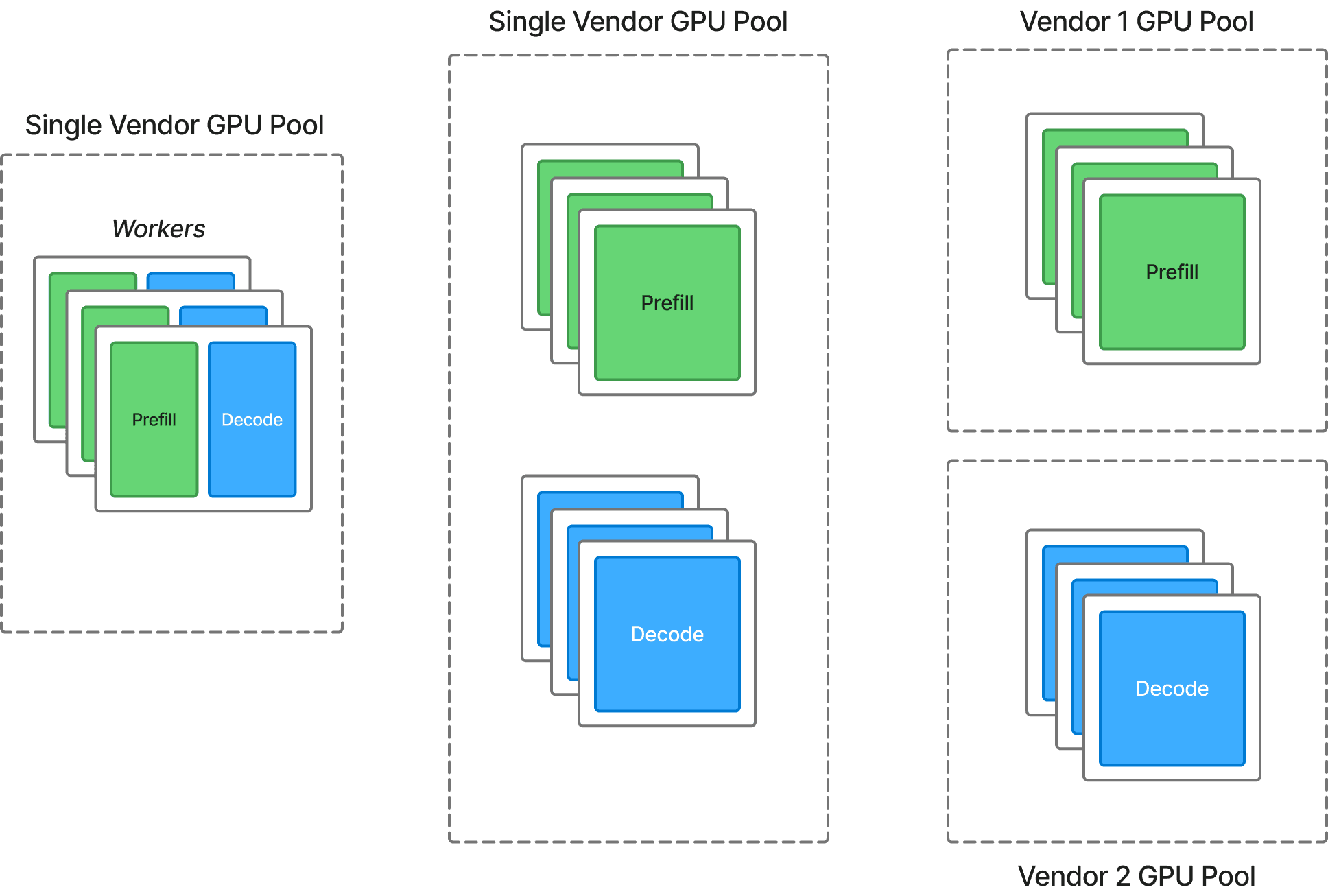
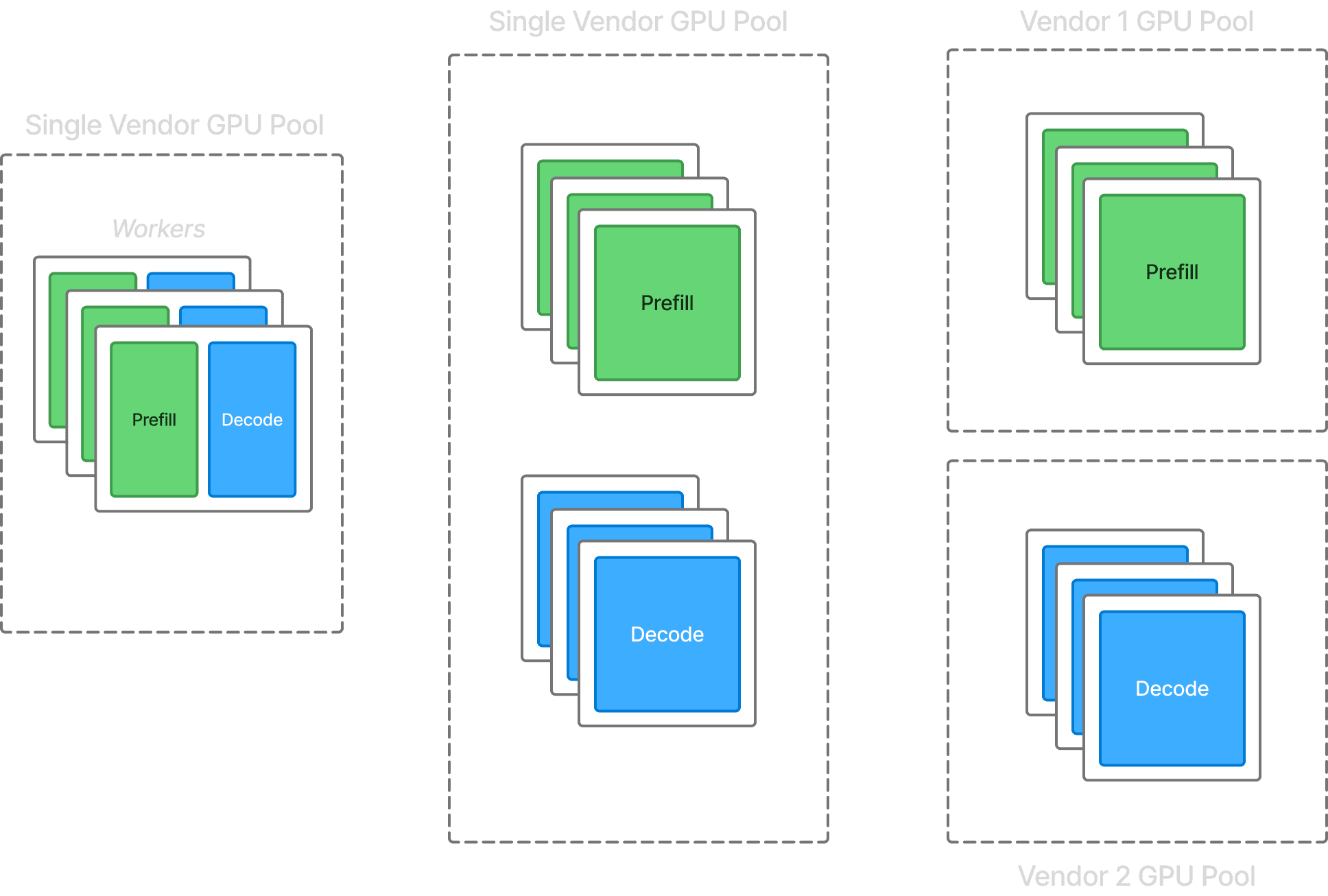
Separating prefill and decode stages of LLM inference improves token throughput because their resource needs differ. Although most deployments use NVIDIA hardware for both stages, multivendor disaggregation can actually improve efficiency while maintaining SLAs. Based on our models using NVIDIA B200s and Intel Gaudi 3, common workloads can see 1.7X TCO improvement compared to single-vendor disaggregation.
Our lab investigated whether frontier models can write optimized GPU kernels for Apple devices to speed up inference. We found that they can: our AI-generated Metal kernels were 1.24x faster across KernelBench v0.1 problems, and 1.87x faster across KernelBench v0 problems.