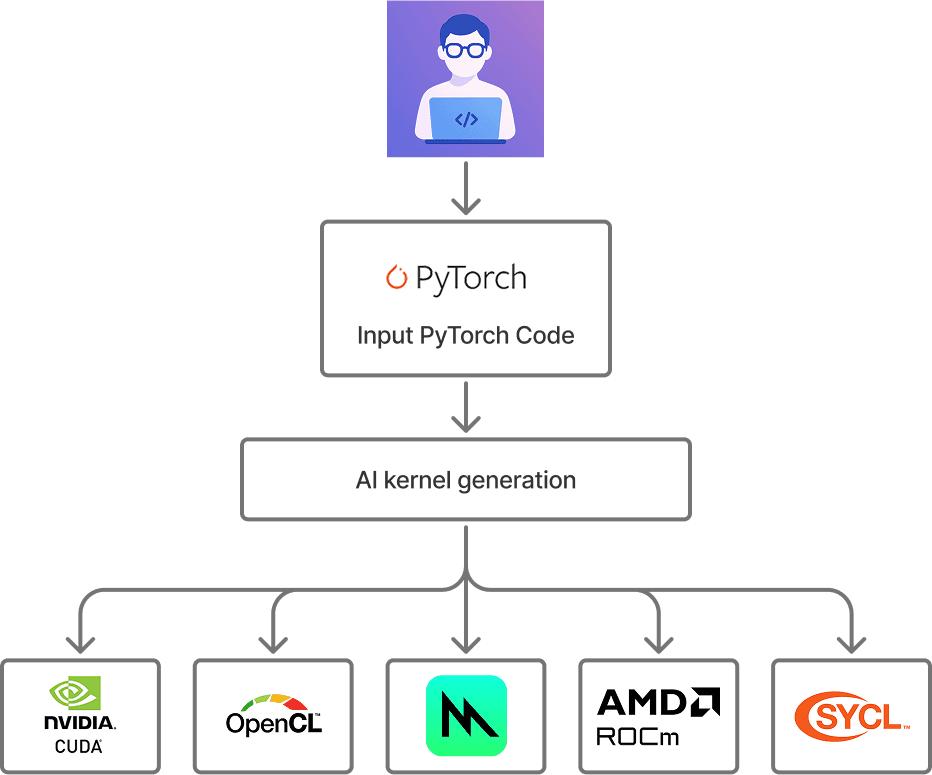
At Gimlet, we are building a self-optimizing multi-silicon inference cloud. As agents optimize their own inference efficiency, they enter a recursive self-optimization loop where they can optimize for an ever-longer tail of use cases. And in adapting to new hardware, they accumulate knowledge that improves their ability to make future optimizations more effective.
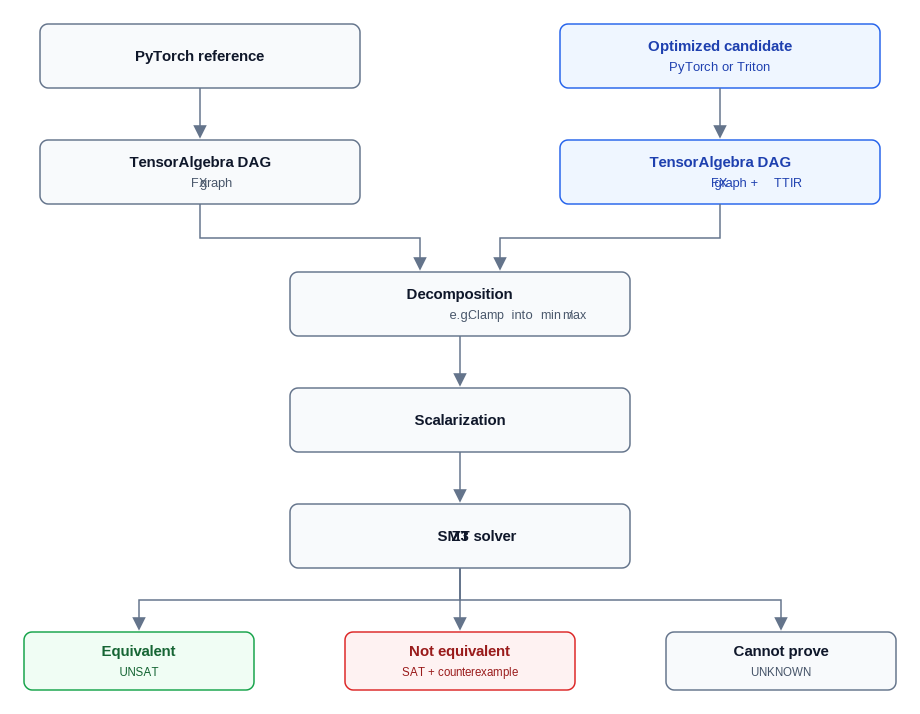
As AI agents get better at generating performant GPU kernels, building trust in their outputs becomes the bottleneck. At Gimlet, we've built an early research system that uses formal verification to complement traditional numeric tests in catching bugs in AI-generated kernels.
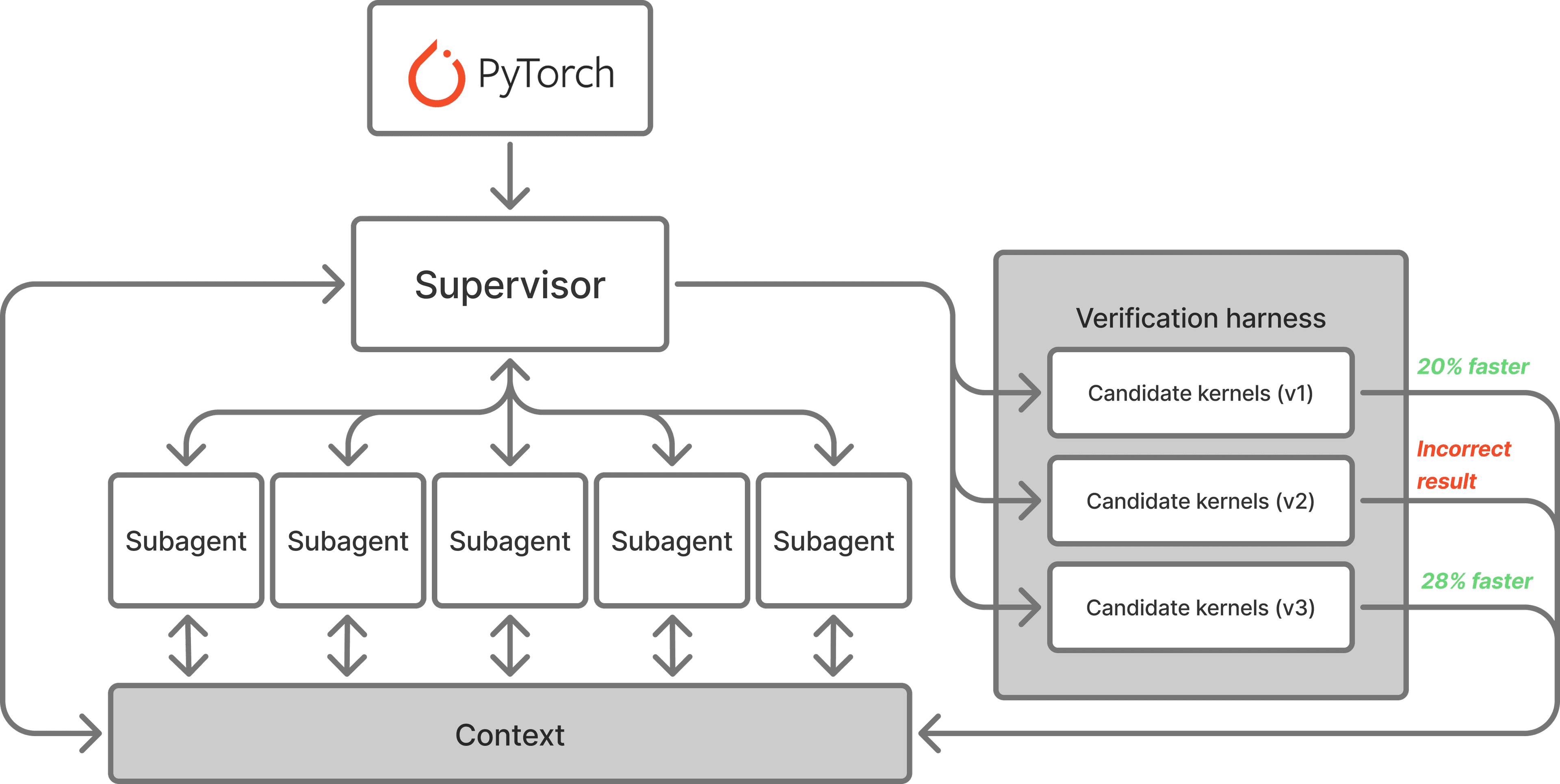
We extended our kernel generation research to CUDA, benchmarking on an H100 where generated kernels achieve around 1.8X speedups over baseline PyTorch (including torch.compile).
By Taras Sereda, Natalie Serrino, Zain Asgar, Burak Bartan
Our lab investigated whether frontier models can write optimized GPU kernels for Apple devices to speed up inference. We found that they can: our AI-generated Metal kernels were 1.24x faster across KernelBench v0.1 problems, and 1.87x faster across KernelBench v0 problems.